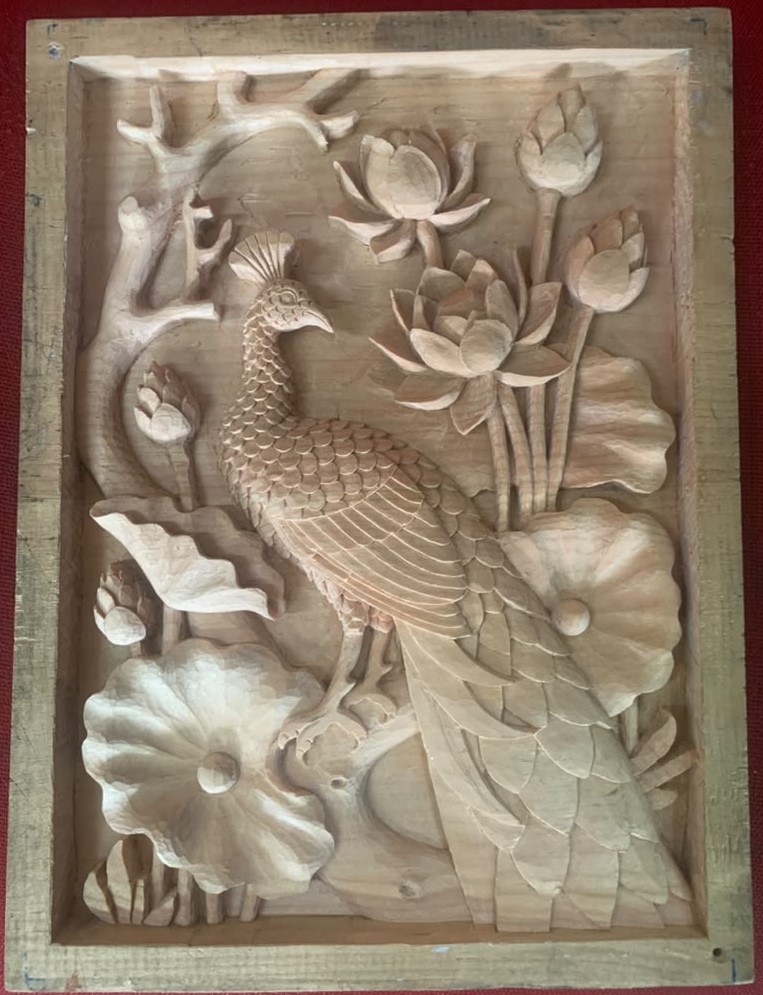

Maja, Peacock carries deep symbolic meaning in Buddhist and Bhutanese traditions. It is revered across Himalayan Buddhist traditions as a symbol of purity, transformation, and enlightened beauty. Its majestic form and radiant presence embody both worldly elegance and profound spiritual teachings.
Purity Amidst Impurity:
The peacock is one of the most significant symbols in Buddhism because it is believed to consume poisonous plants without being harmed, transforming poison into the brilliance of its feathers. This represents the Buddhist path itself—the transformation of ignorance, hatred, and attachment into wisdom and compassion.
Compassion and Beauty:
Its graceful movement and majestic bearing symbolize the balance of compassion and dignity. It teaches that true beauty arises from inner purity and spiritual realization rather than outward appearance.
n Bhutan, the peacock appears in traditional art, textiles, wood carvings, and sacred ornamentation. It is admired for its regal beauty and often represents:
Within Bhutanese craftsmanship, the peacock is not only decorative but deeply meaningful, often carved into religious and ceremonial spaces as a sign of auspiciousness and divine blessing.
Product 0109 showcases the carving of Maja from ‘Bogh’.
Our Timber Source is a remarkable piece with a rich history. It was originally utilized as a Bogh element in Chagri Monastery and is believed to be around 300 years old. The age and significance of this timber element make it a valuable addition to any collection.